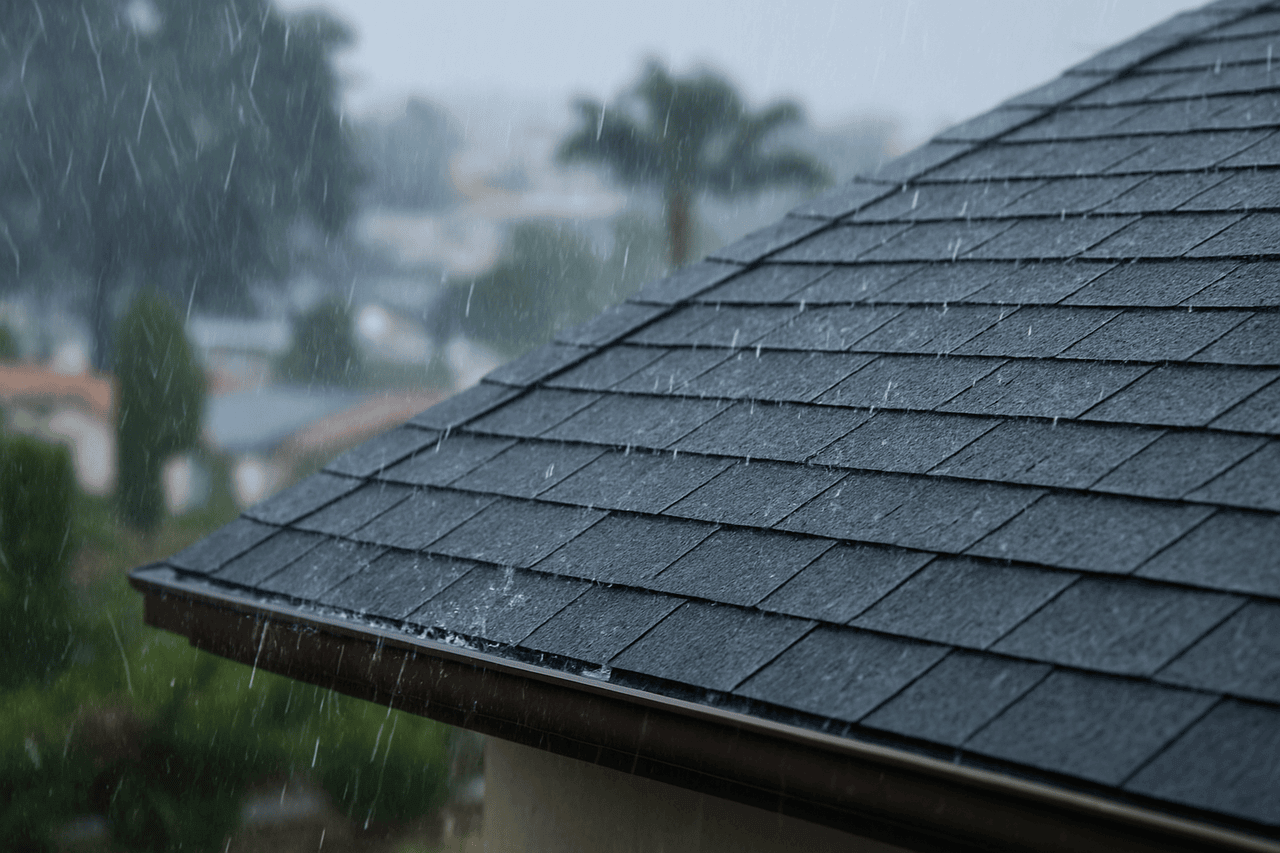

San Diego’s housing stock is aging, and with roughly 71% of homes older than 30 years, many roofs are already at or past typical service life, which makes a professional roof assessment more important than ever for local homeowners and property managers.
A clear and modern assessment helps you understand current condition, upcoming repairs, and opportunities to improve comfort, safety, and reduce stress concerning your home’s roof.
1. Why A Roof Assessment Matters In San Diego’s Climate
A roof in San Diego faces intense UV exposure, coastal moisture, and rising heat events, so quick visual check is important to do regularly to protect your home or building. But that is just part of a proper assessment
A structured roof assessment gives you a score for safety, lifespan, and performance so you can budget for top energy-saving commercial roof strategies and avoid surprise leaks.
San Diego specific challenges your assessment should cover
Our inspectors pay close attention to UV aging, cracked or curling shingles, and brittle underlayment that often show up years before obvious leaks.
In coastal areas, we also look for early corrosion around flashing, fasteners, and rooftop equipment that can quietly weaken your system.
Planning around real roof lifespans
Asphalt shingles in San Diego typically last 20 to 30 years, while tile roofs can last 40 years or more if the underlayment and flashings stay healthy.
During a roof assessment, we compare your roof’s age and condition to these realistic ranges so you know if you are in the “monitor,” “repair,” or “plan to replace” window.
2. How A Roof Assessment Works For San Diego Properties
With a fair assessment, San Diego homeowners can quickly benchmark roof condition in about 10-15 minutes.
It stems from using common sense to review the most serious roof problems such as visual damage (missing tiles or shingles) or leaks from the roof to inside the home, and prioritizing the problems with an expert local roofer.
From self-assessment to professional confirmation
If your self-assessments suggest moderate to high risk of severe roof problems such as leaks, we follow up with a free in-person roof assessment to confirm your findings.
What your roof assessment tells you
Your score falls into practical ranges, such as “healthy and maintain,” “needs targeted repairs,” or “strong candidate for replacement within a few years.”
We also note opportunities for commercial cool roofs or improved commercial roof insulations, especially when you want to lower cooling costs.
3. Step‑By‑Step Process To Request A Professional Roof Assessment
We like to keep the process simple and transparent so you always know what comes next.
Here is how to request and complete a professional roof assessment in San Diego with us.
Step 1: Initial contact and information gathering
You reach out by phone or through our website and share your address, roof age if known, and any problems you have noticed.
We ask a few quick questions about the structure, such as single family, duplex, or commercial, so we can assign the right specialist.
Step 2: Scheduling your on‑site assessment
We set an appointment on a day and time that works for you, and we let you know how long we expect to be on site.
For multi‑unit or commercial properties, we coordinate with property managers to access mechanical rooms, roof hatches, and any locked areas.
Step 3: The on‑roof inspection
On the day of your appointment, our inspector performs a safety check first, then walks the roof systematically to review membranes, shingles or tile, penetrations, flashing, and drainage.
We also evaluate attic or ceiling spaces when accessible, which helps us understand moisture, ventilation, and insulation performance that affect your roof health.
Step 4: Findings, photos, and recommendations
After the inspection, we share photos and a clear written summary of what we found, including urgent issues and preventative recommendations.
If the assessment identifies active leaks, we outline repair options immediately, and if the roof is near end of life, we explain re‑roofing or replacement paths without pressure.
Did You Know?
2025 Building Energy Efficiency Standards (Title 24, Part 6) require cool roofs for most new construction and re-roofing projects, effective January 1, 2026.
Source: California Energy Code / CRRC
4. What A Roofing Company May Check During A Roof Assessment
A good roof assessment in San Diego goes far beyond looking for missing shingles.
We use a structured checklist so nothing important is overlooked, especially on older or complex roofs.
Structural and surface condition
We look for sagging areas, soft spots, and cracked or broken tiles or shingles.
We also note granule loss, blistering, and UV damage that signal your roof surface is nearing the end of its protective life.
Flashing, penetrations, and leak points
Our team inspects all transitions, such as chimneys, skylights, plumbing vents, and HVAC curbs, because most leaks begin at these details.
We check sealants, counter flashings, and any previous repairs to see if they are still performing or need to be redone properly.
Drainage and gutter performance
We confirm that water can move off the roof efficiently without pooling in low spots or backing up at downspouts.
On commercial roofs, we pay special attention to scuppers, internal drains, and parapet details that can clog or separate over time.
5. Integrating Energy Efficiency Into Your Roof Assessment
A modern roof assessment in San Diego should always consider energy performance alongside leak risk.
This is especially true as Title 24 requirements push more buildings toward commercial cool roofs and better commercial roof insulations.
Evaluating cool roof potential
We review your existing surface for solar reflectance and heat absorption, and we discuss whether a reflective shingle, membrane, or coating would be a good fit.
For many commercial and multifamily buildings, upgrading to cool roofing is one of the top energy-saving flat roof strategies available.
Insulation and ventilation checks
Inside the attic or plenum, we look at insulation depth, condition, and coverage, as well as ventilation design.
Balanced intake and exhaust ventilation helps your roof last longer and can significantly reduce cooling load in sunny San Diego.
6. Commercial Roof Assessment And Energy Benchmarking
For commercial and multifamily properties in San Diego, a roof health assessment often connects directly to building energy benchmarking and operating costs.
Your roof is a large part of the building envelope, so its condition affects comfort, HVAC sizing, and utility bills.
Focus areas for commercial roofs
We look closely at seams, field membranes, transitions at equipment, and traffic patterns that can damage low slope systems.
We also evaluate whether your roof meets or could meet the performance metrics linked to commercial cool roofs and Title 24 pathways.
Planning top energy-saving commercial roof strategies
Based on our findings, we might recommend a high SRI cool roof membrane, added rigid insulation, or strategic shading and walk pads for long term durability.
For many owners, pairing roof upgrades with other efficiency work creates a stronger energy benchmarking story and better tenant comfort.
Did You Know?
San Diego’s Building Energy Benchmarking Ordinance requires annual energy data submissions for commercial and multifamily buildings over 50,000 square feet, tying roof performance directly to reported efficiency.
Source: City of San Diego
7. Using Roof Assessments To Decide Between Repair, Re‑Roof, And Replacement
One of the most valuable outcomes of a roof assessment is a clear, unbiased path forward.
We break options into repair, re‑roofing, or full replacement, based on what will protect you best and make financial sense.
When strategic repairs are enough
If your roof is relatively young and problems are isolated, we focus on targeted repairs.
This can include fixing a leaking valley, replacing damaged shingles, or resealing specific penetrations while keeping most of the system in service.
When re‑roofing or full replacement is smarter
On older roofs with widespread wear, continuing to patch can cost more over time than planning a replacement.
Your assessment will outline how much useful life is left and what a re‑roof or new roof could provide in terms of warranty, durability, and energy efficiency.
8. Real San Diego Examples: What Happens After A Roof Assessment
Seeing real projects helps make the assessment process feel concrete.
Here are a couple of examples of what happens after we complete a thorough roof evaluation.
Residential roof and carport replacement
On one San Diego home, an inspection showed a very worn main roof and a mismatched, deteriorating carport section.
We recommended and completed a full replacement that tied both areas together, improving protection and appearance while staying on time and on budget.
Commercial roof upgrade with efficiency focus
For a local apartment building, an assessment found aging shingles, complex penetrations, and rising cooling costs.
The owner chose a full commercial roof upgrade in a cool gray dimensional shingle, pairing better weather resistance with improved commercial roof energy efficiency for tenants.
9. Budgeting And Planning After Your Roof Assessment
Once you know exactly where your roof stands, the next step is setting a realistic budget and timeline.
We help you plan so you are not making rushed decisions during the next heavy rain.
Understanding cost ranges
During the consultation phase, we can provide ballpark figures for repairs, re‑roofing, or full replacement based on what we see.
For many San Diego homes, replacement projects fall into five‑figure ranges, so advance planning is key to avoid financial strain.
Aligning scope with long term goals
If you plan to stay in the property for many years, it often makes sense to invest in longer lasting materials or commercial cool roofs where appropriate.
If a sale is coming soon, we can advise on the minimum smart repairs or upgrades that keep inspection reports clean and buyers confident.
10. How Often You Should Schedule Roof Assessments In San Diego
Roof health is not a one time snapshot, especially in a sunny coastal climate.
We recommend a simple schedule so you can catch small problems before they cause damage inside your home or building.
Suggested assessment intervals
For most asphalt shingle roofs, a professional roof assessment every 2 to 3 years is a good baseline.
For tile roofs, a similar interval focused on underlayment, flashings, and broken tiles helps preserve their long service life.
Event driven assessments
Besides routine intervals, it is wise to schedule an assessment after major wind events, unusually heavy rain, or nearby construction that could affect your roof.
If you notice new stains on ceilings, higher energy bills, or debris accumulation on the roof, a focused review is also a smart move.
A roof assessment in San Diego is about more than spotting current leaks, it is about understanding safety, lifespan, and energy performance so you can plan with confidence.
By starting with a simple roof assessment and following through with a professional on‑site evaluation, you get clear recommendations that respect your budget, timeline, and long term goals for your home or commercial property.
Frequently Asked Questions:
How can I quickly benchmark my roof’s condition in San Diego?
You can start by reading over this helpful article on this website page, then schedule a professional inspection with a reputable roofing company like the team here at Alma Roofing, to confirm findings.
What are top energy-saving roof strategies in San Diego?
The most effective strategies combine commercial cool roofs, upgraded commercial roof insulations, and proper ventilation, as shown in our recent project at Energy-Efficient Roofing in San Diego.
When does a roof health assessment suggest repair vs. replacement?
Our expert roofers evaluate age, leak history, material type, and safety risks, then guide you toward targeted roof repairs or a full roof replacement if needed.
How do I factor in future costs when I assess my roof?
Roof assessments look at lifespan and cost drivers so you can plan ahead, using guidance similar to what we shared for commercial roofs at What Impacts Commercial Roof Costs in San Diego.
Does a roof assessment also cover leak risks?
Yes, roofers should inspect all common leak points, in line with the issues covered in The Ultimate Guide to Roof Leaks in San Diego, and give you a clear prevention plan.
How long should a healthy San Diego roof last?
Material and maintenance matter, but our lifespan guidance follows what we outline in How Long Do Roofs in San Diego Usually Last?.