
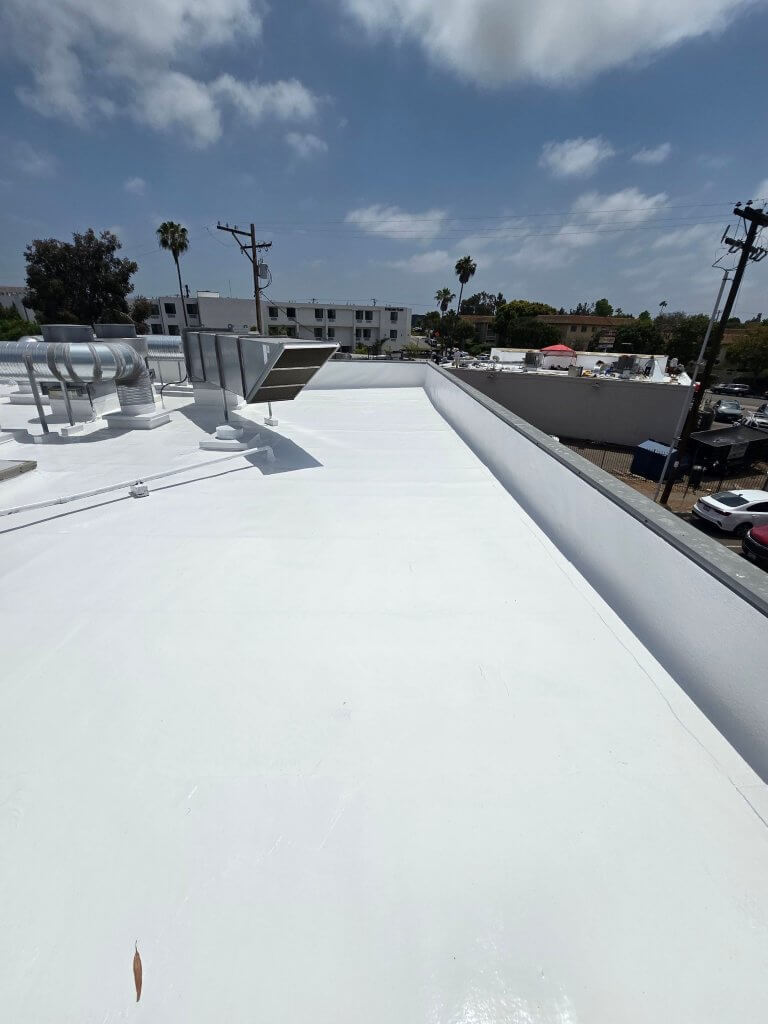
When it comes to selecting the best TPO membrane systems for flat commercial roof structures, the stakes for your business could not be higher. TPO roofing systems can reduce annual commercial cooling costs by 15% to 30%, making the right membrane choice one of the most financially impactful decisions a building owner can make in 2026.
Key Information Summary
| Question | Answer |
|---|---|
| What is TPO roofing? | Thermoplastic Polyolefin (TPO) is a single-ply membrane widely regarded as one of the best systems for flat and low-slope commercial roof structures. |
| What thickness is best for a commercial TPO flat roof? | 45-mil suits basic installations; 60-mil is the commercial standard; 80-mil offers maximum durability and extended service life for high-traffic flat roofs. |
| How long does a TPO membrane last on a flat commercial roof? | A properly installed and maintained TPO system typically lasts 20 to 30 years on a flat commercial structure. |
| Is TPO a cool roof membrane? | Yes. White TPO membranes reflect 80%–90% of solar radiation, qualifying them as cool roof systems that reduce energy costs. |
| Is TPO better than EPDM for flat commercial roofs? | TPO heat-welded seams are significantly stronger than EPDM adhesive seams, offering better long-term waterproofing performance on flat commercial structures. |
| How much does TPO roofing cost compared to PVC? | TPO installation costs are typically 10%–20% lower than comparable PVC systems, making it a cost-effective membrane choice for commercial flat roofs. |
| Can I get financing for a commercial TPO roof installation? | Yes. Roofing financing options are available to help businesses manage the upfront cost of a new TPO flat roof system. |
What Makes TPO Membrane Systems the Best Choice for Flat Commercial Roof Structures?
Flat commercial roof structures face a unique set of challenges that residential roofing systems are simply not designed to handle. Standing water, UV degradation, foot traffic from HVAC technicians, and the large uninterrupted surface area all demand a membrane that performs consistently for decades.
The best TPO membrane systems for flat commercial roof structures address every one of these challenges in a single installation. TPO combines the flexibility of rubber with the weldability and chemical resistance of thermoplastic material, producing a roof that is tough, watertight, and energy-efficient all at once.
As a locally owned and operated San Diego roofing company, we see firsthand how well TPO performs in the warm, coastal climate our region is known for. The high solar reflectance keeps buildings cooler, the heat-welded seams resist ponding water intrusion, and the material holds up year after year with minimal intervention.
Membrane Systems For Commercial Roofs: Key Types & Formats
Not all TPO membranes are manufactured to the same standard, and the differences between product lines directly affect how long your flat commercial roof will perform. Understanding the key formats helps you make an informed investment.
- Standard 45-mil TPO: The entry-level thickness suitable for light-use flat roofs with limited foot traffic.
- Commercial-grade 60-mil TPO: The most widely specified thickness for flat commercial structures, balancing cost with durability.
- Heavy-duty 80-mil TPO: Recommended for high-traffic rooftops, areas with significant HVAC equipment, or buildings in extreme UV environments.
- Fleece-backed TPO: Bonded to a polyester scrim for added dimensional stability, ideal for fully adhered flat roof applications.
- Reinforced TPO with internal scrim: Features a woven polyester reinforcement layer that resists puncture and tearing across wide-span commercial flat roof structures.
Each format requires a specific installation method, and choosing the wrong product for your structure can undermine the membrane’s long-term performance. Our team always evaluates the specific demands of your building before recommending a system.
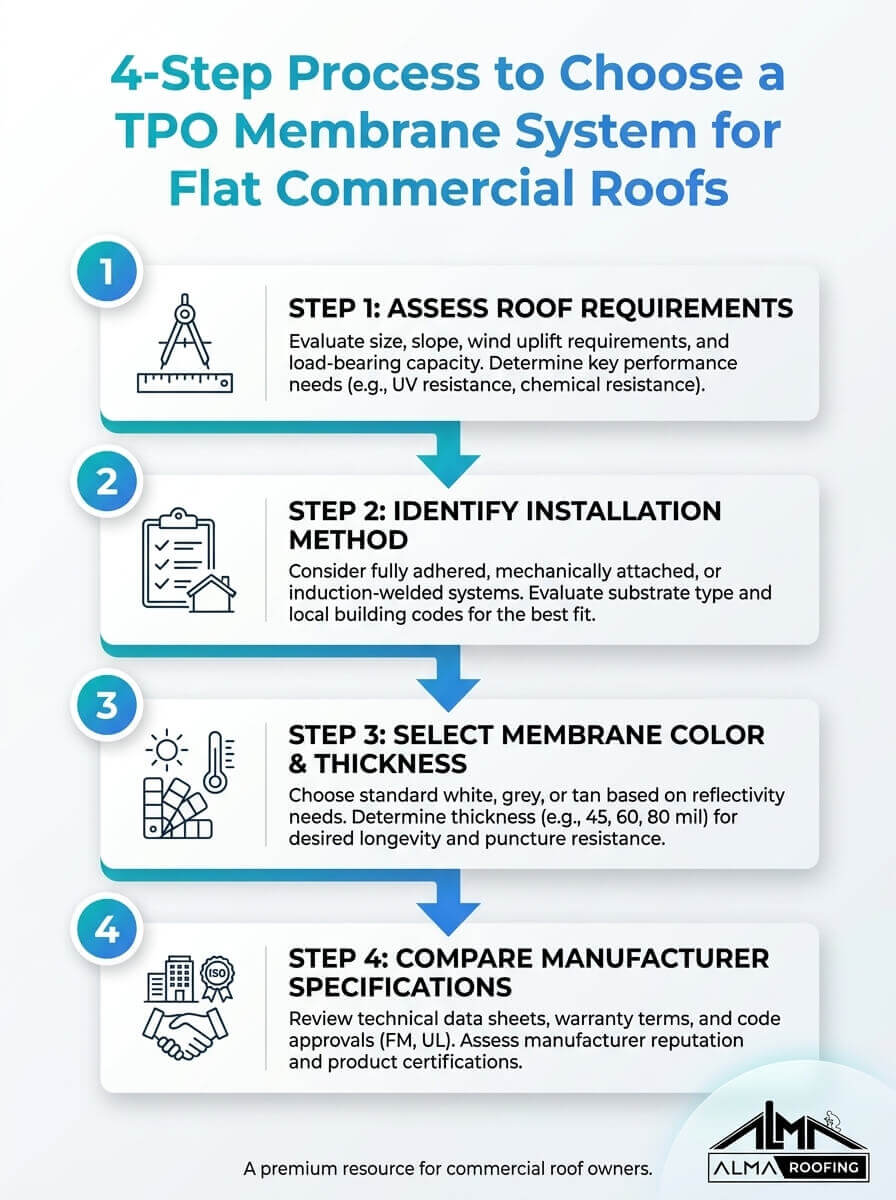
Choose a TPO Membrane System for Your Commercial Roof
Selecting the right TPO system is not just a material decision. It involves evaluating your building’s structural load capacity, roof deck type, local climate conditions, and long-term ownership goals.
Here is a practical framework we use when advising commercial property owners in San Diego and throughout the surrounding region:
- Assess your roof deck. Concrete decks, steel decks, and wood decks each require different attachment methods for a TPO membrane system.
- Define your traffic level. Rooftops with regular equipment access need 60-mil or 80-mil membranes and reinforced walkway pads.
- Evaluate drainage design. The best TPO systems work in tandem with well-designed drainage to eliminate ponding, which is the primary cause of flat roof failures.
- Set your energy goals. If your business is pursuing Energy Star or LEED certification, a white TPO membrane with a high Solar Reflectance Index is the logical choice.
- Plan for long-term maintenance. Factor in inspection schedules and minor repair budgets when comparing total cost of ownership across membrane options.
TPO vs. EPDM vs. PVC: Which Commercial Roofing Membrane San Diego?
Business owners evaluating single-ply membrane options in San Diego frequently compare three systems: TPO, EPDM (ethylene propylene diene terpolymer), and PVC. Each has a distinct performance profile.
| Feature | TPO | EPDM | PVC |
|---|---|---|---|
| Solar Reflectance | 80%–90% | Low (black) | High |
| Seam Method | Heat welded | Adhesive bonded | Heat welded |
| Chemical Resistance | Good | Moderate | Excellent |
| Typical Install Cost vs. PVC | 10%–20% lower | Comparable | Baseline |
| Best Use Case | Most flat commercial roofs | Low-slope, budget projects | Grease-exposed roofs |
For most flat commercial roof structures in San Diego, TPO consistently delivers the best balance of performance, reflectivity, and overall value. As a trusted local roofing company, we recommend TPO for the vast majority of our commercial clients.
TPO Membrane Thickness Guide for Commercial Flat Roofs
Membrane thickness is one of the single most important decisions in any TPO flat roof installation. Thicker membranes resist puncture better, withstand more abuse, and contribute to a longer total service life.
- 45-mil TPO: Acceptable for light commercial applications with minimal rooftop activity. Not recommended for structures with frequent maintenance access.
- 60-mil TPO: The industry standard for commercial flat roofs. Provides reliable performance for most business properties and is backed by solid manufacturer warranties.
- 80-mil TPO: The premium option for demanding flat commercial roof structures. An 80-mil TPO membrane can extend a roof’s service life by 5 to 10 years compared to a standard 45-mil sheet, making the upfront investment highly defensible over the life of the building.
We always help our clients match membrane thickness to their specific building needs, because selecting the wrong gauge wastes money in one direction or another. Getting this right from the start protects your investment for decades.
For buildings undergoing a full commercial roof replacement, upgrading to 60-mil or 80-mil TPO at the time of installation is far more cost-effective than attempting to address premature failures on a thin membrane later.
Cool Roof Benefits: Why TPO Is Top-Rated
San Diego’s climate makes solar reflectance an especially important factor when selecting any flat commercial roofing membrane. White TPO membranes reflect between 80% and 90% of solar radiation, which directly reduces the heat load transferred into your building during warm months.
This matters for your energy bills every single month of the year in Southern California. The energy savings from a white TPO reflective surface typically pay for the material’s cost premium within 5 to 7 years in warm climates like ours, making it one of the smartest long-term investments a commercial property owner can make.

White TPO membranes also achieve a Solar Reflectance Index (SRI) of 104 to 110, which satisfies the requirements for Energy Star and LEED certification programs. For commercial property developers and building owners pursuing green building status in 2026, properly installed TPO systems can contribute approximately 15% of the total points required for LEED v4.1 BD+C certification.
Our team offers cool roof upgrades that incorporate high-performance white TPO membranes designed specifically for San Diego’s building environment. We stand behind both the materials we use and the craftsmanship we deliver on every flat commercial roof we install.
Install Methods for TPO Membrane Systems
The quality of a TPO membrane is only as good as the quality of its installation. Three primary attachment methods are used for flat commercial TPO roofing systems, and each has specific applications.
- Mechanically attached TPO: The membrane is fastened to the roof deck with screws and plates, then all seams are heat-welded. This method is fast and cost-effective for large flat commercial structures.
- Fully adhered TPO: The membrane is bonded to the insulation or deck using a contact adhesive. It produces a cleaner appearance and performs well in high-wind zones.
- Ballasted TPO: Loose-laid membrane held in place with smooth river rock or pavers. Best suited for flat commercial roofs with adequate structural load capacity.
Regardless of the attachment method, every TPO installation relies on properly heat-welded seams to maintain a watertight barrier. Our certified installers use calibrated hot-air welding equipment to ensure every seam meets or exceeds manufacturer specifications.
How a Roofing Company Installs TPO
As a locally owned and operated San Diego roofing company, we follow a precise installation process designed to deliver the best TPO membrane systems for flat commercial roof structures on time and within budget.
Here is what you can expect when our team handles your commercial flat roof TPO installation:
- Roof inspection and substrate assessment: We evaluate the existing deck, insulation condition, and drainage layout before any material is ordered.
- Removal of failed existing membrane (where applicable): Old EPDM, built-up roofing (BUR), or deteriorated TPO is stripped back to a clean, stable substrate.
- Insulation installation: Polyisocyanurate (polyiso) or EPS insulation boards are laid to achieve the required R-value and promote positive drainage.
- TPO membrane layout and attachment: Sheets are rolled out, cut to fit, and secured using the specified attachment method for your structure.
- Heat-welding of all field seams and flashings: This is the most critical step. Our team welds every seam to a minimum 1.5-inch width, then probe-tests each weld for integrity.
- Drainage, penetration, and edge detail finishing: All roof penetrations, drains, curbs, and edge terminations are sealed and flashed to complete the watertight assembly.
- Final inspection and documentation: We walk the completed roof with you and provide warranty documentation before we leave the site.
We handle everything from permits to final finishing, so you can focus on running your business while we protect it from above. Our commercial roofing services cover the full scope of flat roof membrane systems across San Diego County.
Tips to Extend the Life of Your TPO Roof System
Even the best TPO membrane systems for flat commercial roof structures will underperform if they are not properly maintained after installation. Routine care is what separates a 15-year roof from a 30-year roof.
The good news is that TPO maintenance does not require significant labor or expense when performed consistently. The following practices keep your flat commercial roof in peak condition year after year.
- Bi-annual inspections: Schedule professional inspections in the spring and fall to catch seam separations, punctures, and flashing failures before they become water intrusion events.
- Drain clearing: Keep roof drains and scuppers clear of debris at all times. Ponding water is the primary accelerant of TPO membrane degradation.
- Walkway pad installation: Install purpose-designed walkway pads wherever rooftop equipment requires regular access. These protect the membrane from abrasion and puncture.
- Prompt seam and puncture repairs: Small repairs cost a fraction of what full membrane replacement costs. Address damage as soon as it is identified.
- UV reflectivity assessment: In 2026, we recommend assessing white TPO membrane reflectivity every 5 years to confirm ongoing cool roof performance.
If your flat commercial roof develops a leak or you suspect membrane damage, our team provides fast, reliable roof repair services across San Diego to stop the problem before it costs you more. We also offer 24/7 emergency roofing response for situations that cannot wait.
Request a Professional Roof Assessment to Benchmark TPO System
A professional roof health assessment gives you an objective, documented benchmark of your flat commercial roof’s current condition. This is the most reliable way to determine whether your existing membrane has years of service life remaining or whether a full replacement is the smarter investment.
Here is how the assessment process works when you work with our team:
- Step 1 – Contact our team: Reach out via our contact page to schedule your commercial roof health assessment at a time that works for your business operations.
- Step 2 – On-site inspection: Our certified commercial roofing specialists conduct a thorough inspection of your flat roof structure, covering membrane condition, seam integrity, flashing performance, drainage functionality, and insulation status.
- Step 3 – Condition benchmarking report: We document our findings in a clear, itemized condition report that benchmarks your roof against the expected performance standards for its membrane type and age.
- Step 4 – Recommendations and options: We present you with a prioritized action plan, whether that means targeted repairs, a partial re-cover, or a full commercial roof replacement with a new TPO system.
This process removes all the guesswork from commercial roof ownership. You get a clear picture of where your building stands and exactly what it will cost to protect it going forward.
We are a locally owned and operated San Diego roofing company, and we take pride in giving our commercial clients honest assessments they can act on with confidence. You will always know exactly what you are getting and why.
Frequently Asked Questions About TPO Membrane Systems
We answer these questions regularly for business owners across San Diego. Here are the most common ones:
- Can TPO be installed over an existing flat roof membrane?
- In many cases, yes. A TPO re-cover over an existing EPDM or built-up roof is possible if the substrate is structurally sound and dry. Our team inspects the existing system before making this determination. Learn more about our re-roofing options for commercial properties.
- What warranties are available for TPO flat commercial roof systems?
- Most commercial TPO manufacturers offer material warranties ranging from 10 to 30 years depending on membrane thickness and installation method. As certified installers, we provide workmanship warranties on top of the manufacturer’s material coverage.
- Does TPO work well in San Diego’s climate?
- Absolutely. San Diego’s warm, sunny climate is actually ideal for white TPO performance. The high solar reflectance of TPO membranes reduces cooling loads significantly, and the mild winters mean fewer freeze-thaw cycles that can stress a flat roof membrane.
- How do commercial buildings save money on cooling with TPO?
- Commercial buildings utilizing TPO can save between $0.50 and $1.00 per square foot in annual cooling costs. For a 10,000 square foot flat roof, that represents $5,000 to $10,000 in annual HVAC savings.
- What is the best way to finance a new TPO commercial roof?
- We offer financing options designed to make commercial roof investments manageable. Visit our financing page for current programs available to San Diego business owners.
Final Thoughts About Choosing the Best TPO Membrane Systems for Commercial Roofs in San Diego
The best TPO membrane systems for flat commercial roof structures deliver a combination of performance, energy efficiency, and long-term value that few other single-ply options can match. In 2026, white TPO remains the dominant choice for business owners across San Diego who want a flat roof that works hard, lasts long, and reduces operating costs year after year.
From selecting the right membrane thickness and attachment method to ensuring every seam is properly heat-welded, every detail matters in a commercial flat roof installation. We bring old-fashioned craftsmanship and modern technical precision to every project we take on, because we know your building is one of the most significant investments your business has ever made.
Whether you need a brand-new TPO flat roof, a professional health assessment to benchmark your current system, or urgent repairs to stop a leak, our team is here to help. As your trusted San Diego roofing company, we stand behind every roof we install and every recommendation we make.
Ready to get started?
Contact our team today to schedule your professional commercial roof health assessment and find out exactly what the best TPO membrane system looks like for your flat commercial roof structure.


